
FORECAST 2026 Honorable Mention Artists
Aishah Balogun | Ari Salomon | Beatrice Thorton
Beatrice Thorton
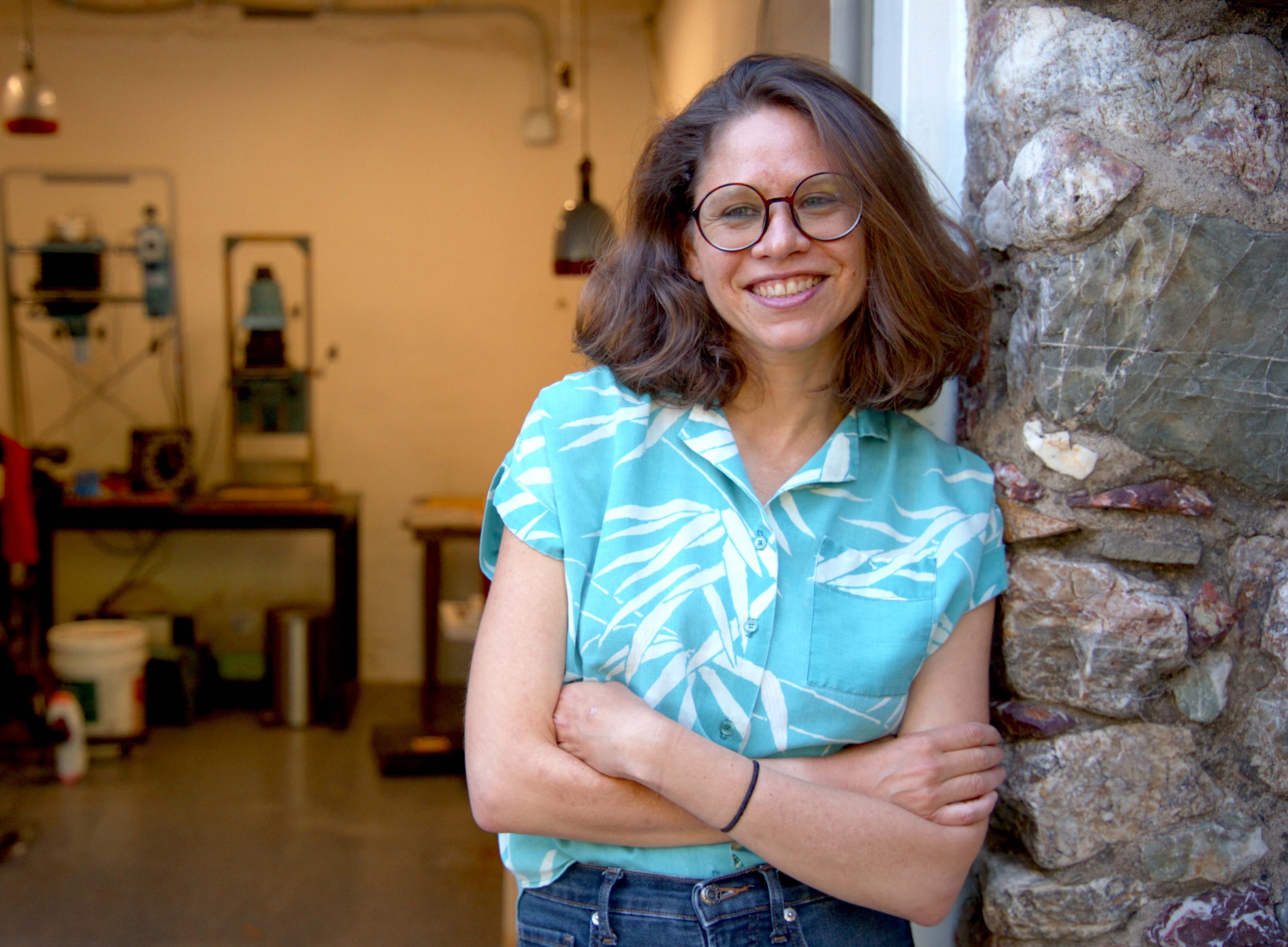
Beatrice Thornton is an Oakland-based land artist, archivist, historian, and darkroom instructor working in black-and-white film photography through sustainable, alternative darkroom processes equally in dialogue with place and medium. Since moving back to the Bay Area from New York in 2018, she has been exploring ways that reconnect her to her home state — along the way learning, questioning, and considering its complex histories with a sense of wonder spanning , bioregionalism, art and design history, archival methods, and darkroom-based graphic design.
She develops film and prints in her home darkroom, creating developer recipes using ingredients including foraged plants, collected rainwater, and low-toxicity household ingredients in place of traditional darkroom chemistry.
Her photographic style often features landscapes and architecture through in-camera double exposures and in-darkroom graphic design. She pairs developers with plants featured in, or that grow within the environments pictured. She sees developing with plants as a circular process where the art she produces is as much about process as it is the final objects.
Beatrice holds a BA in art history and French from New York University and took darkroom courses at Parsons School of Design and NYU. She received an MA in decorative arts, design history, and material culture from Bard Graduate Center, and holds a certificate in archives and records management from Long Island University. She grew up in Mill Valley and lives in Oakland, CA. Her work is included in private collections and has been exhibited nationally.
Project Statement
Pilgrimage Routes and Relics features designed compositions formed from in-camera single and double-exposures of landscapes and objects from within them. These are all silver gelatin prints developed in homemade plant-based, low-toxicity developer chemistry enlarged from film which I have similarly processed in my home darkroom. Some of the plants in my chemistry grow in these landscapes and have healing properties I hope viewers might sense through the imagery. Each of the Pilgrimage Routes are multi-negative compositions from locations where I have hiked in Northern California and with which I have formed deep connections both growing up in the Bay Area and returning to it in my thirties after more than a decade on the East Coast. These locations include the Dipsea Trail on Mount Tamalpais, the Laguna Trail in Point Reyes National Seashore, Garrapata State Park in Big Sur, Sibley Volcanic Regional Preserve in Oakland, and the Coastal Trail near Muir Beach. Location is only the setting for these pieces. Reproducing what I saw is as far from the point as where the sun sits on the horizon. I made some of the frames from very similar vantage points but from slightly different angles. In Dipsea Pilgrimage, for example, I turned my camera upside-down without advancing the frame to form layered strips and islands of floating earth. The Relics include compositions of plants and plant matter I have gathered on the trails, pieces of the routes, which in themselves form landscape-like compositions through shadow-play and double-exposures of the relic objects in various arrangements. A piece of eucalyptus bark or redwood needles layered over yarrow stems and flowers. Pilgrimage Routes and Relics is an exercise in cross-disciplinary thinking that connects photography with design, poetry, ecology, herbalism, and philosophy. The concept of the pilgrimage came about while contemplating why we make journeys for spiritual reasons. Through this body of work, I hope to communicate how pilgrimages need not necessarily be lengthy undertakings with a larger purpose. They can be as simple as spending time in community with our surroundings. This project began around 2020 when I pieced together three negatives to form Carmel Valley Pilgrimage after noticing three double exposures on one of my rolls where one of the exposures on each frame included the same ridge line. I tried connecting these frames to form a larger imagined place. Since making this first composition, I now see my negatives as living parts of potential compositions rather than complete images. They are always ready to be reformed and revisited in varying contexts. Through all of these pilgrimages, there is the continuity of line from one frame to another, the twisting ribbon-like waveform, the DNA strand, the trail that forms from overlapping mountains and ridges, a new landscape from what I initially perceived. To adapt from Paul Klee's Pedagogical Sketchbook: I am taking the line (or the roll of film) for a hike for a hike's sake.